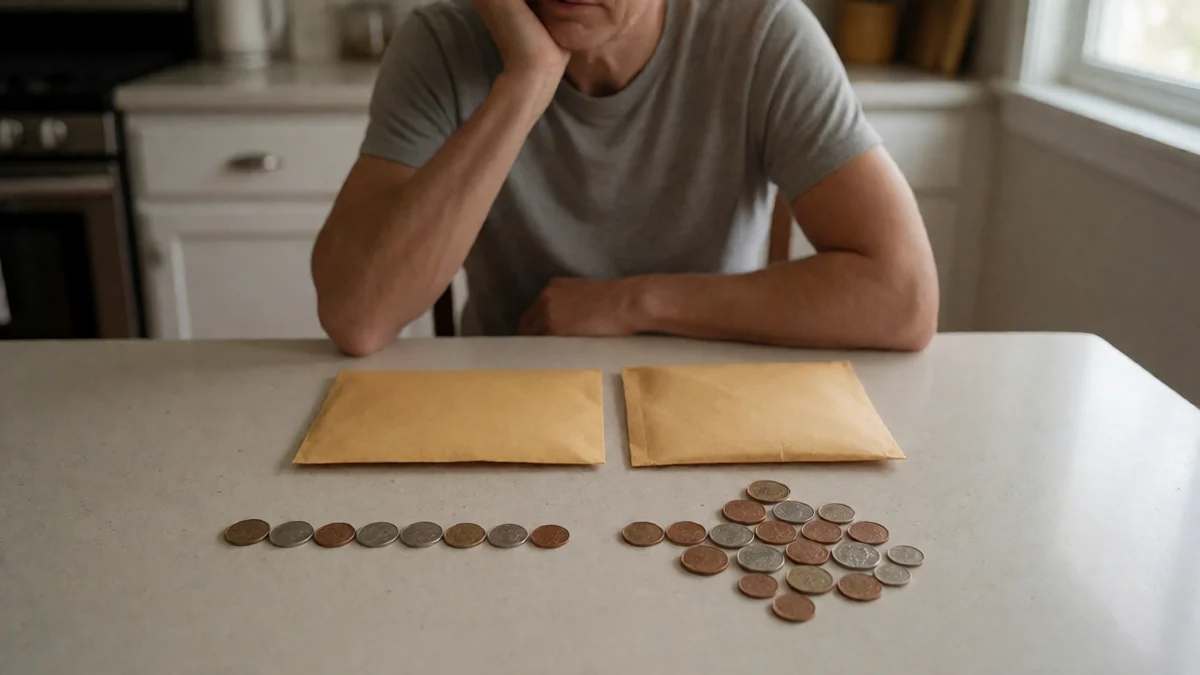
The central difference is when the contract demands repayment
The Consumer Financial Protection Bureau describes an installment loan as one repaid through scheduled payments over time. Its payday-loan guidance describes payday loans as generally short-term loans intended for repayment on the borrower’s next payday, commonly with the principal and finance charge due in one payment. That is the practical divide: one due-date burden versus a sequence of due-date burdens.
The contract decides which structure is actually on offer. Read the payment schedule and maturity date to establish whether repayment is due once or in installments; then use the disclosure to identify the amount financed, APR, finance charge, and total of payments. The payment authorization, late-payment language, collateral terms, and early-payoff terms complete the comparison. Loan labels are marketing shorthand, not a repayment schedule.
Compare the contracts across the same seven fields
| Criterion | Payday Style Single Payment Loan | Closed End Installment Loan |
|---|---|---|
| Number and timing of payments | Find the full payoff date and amount due in the agreement. The central question is whether principal and the finance charge are due together on one scheduled date. | Find the payment schedule. Count the scheduled payments and note every due date rather than relying on the payment shown most prominently. |
| Required payment amount | Compare the single scheduled payoff with the surplus left after rent, food, utilities, transportation, and other essentials for that pay period. | Read each scheduled payment amount and whether it changes. A lower periodic payment measures cash-flow pressure on that date, not the loan’s full cost. |
| Maturity and repayment duration | Locate the one full due date. A short term ends quickly only when the full payoff is made on time. | Locate the maturity date and the span from first payment to final payment. More time can spread payments while keeping the borrower obligated longer. |
| APR and finance charge | Read the disclosed APR and finance charge in dollars. | Read the disclosed APR and finance charge in dollars for the entire scheduled term. Compare them against the single-payment offer using the same borrowed amount when possible. |
| Total of payments | Add or locate the required payoff: amount financed plus the stated finance charge. Check whether the document shows any separate payment-related charges. | Find the disclosed total of payments and compare it with the amount financed. This is the figure that exposes whether smaller installments add up to a larger bill. |
| Security or collateral | Read the security agreement and any language identifying property at risk. Do not assume the product is unsecured from its label. | Read the collateral or security section and identify the property named, if any. Collateral can affect access or pricing, but it also puts that property at risk. |
| Late or unsuccessful payments | Read the payment authorization, unsuccessful-withdrawal terms, returned-payment charges, and consequences of a missed due date. For loans covered by federal payday-lending rules, a lender generally needs new and specific authorization after two consecutive failed withdrawal attempts. | Read the late-payment clause, payment-method authorization, returned-payment terms, and any default or collateral consequences. The agreement, payment method, and applicable rules determine the result of a missed payment. |
| Early repayment | Check whether the agreement states an early-payoff amount or any rule that changes the charge when payment is made before the due date. | Check the early-repayment clause and request the payoff amount if considering an early exit. The scheduled total is not automatically the same as the amount required to close the loan early. |
A smaller payment can still produce a larger total obligation
Installments solve a timing problem, not automatically a cost problem. Dividing repayment across several dates reduces the amount demanded on each date, but it can extend the period during which finance charges accrue. A single-payment structure has the opposite hazard: it can be over sooner, but it concentrates the entire obligation into one moment when the borrower must have the cash.
Dollar charges deserve as much attention as the payment amount. Compare an installment offer’s finance charge and total of payments alongside its APR and the corresponding figures for the payday-style loan. The monthly number is a cash-flow fact, not a verdict.
Choose by verified cash flow—and reject both when the numbers fail
- One known surplus: A payday-style single-payment loan is worth comparing only when one specific income date leaves enough surplus to cover the full payoff after essentials. Its deciding fact is the entire amount due on that date, plus the consequences if an authorized withdrawal fails.
- Reliable surplus across several pay periods: A fully disclosed closed-end installment loan usually creates less payment shock because it divides required payments across income dates. Its deciding facts are the payment schedule, finance charge, total of payments, and any collateral or late-payment consequences.
- No reliable surplus after essentials: Reject both structures. Extending the term does not create affordability; it merely distributes an obligation that the budget does not support. Taking a new payday loan or rolling one over to cover an old one can add fees without reducing the original principal, according to the FTC.
Installments win for borrowers with dependable surplus across multiple pay dates; a single-payment structure only belongs in the comparison when the full payoff is already covered by one verified surplus. When neither schedule fits after essentials, the sound verdict is neither loan.
Official pages used here
- Small Loan Companies — New Mexico Regulation and Licensing Department
- Financial Institutions Division — Frequently Asked Questions — New Mexico Regulation and Licensing Department