What kind of offer are you looking at?
A screen offers a few hundred dollars, asks when you are paid, and centers a fee beside a near-term repayment date. Then it requests permission to draw a payment from a bank account. Those are the practical marks of a payday-style transaction: a small principal, a short repayment horizon, a scheduled debit or other payment, and a prominent charge for the advance.
Treat the product name as weak evidence. A business may market “cash advance,” “installment loan,” or “emergency funding,” while the actual terms still concentrate repayment into the next pay cycle. Look instead to the proposed agreement: how much is advanced, when each payment is due, how payment is collected, and what the charge adds to the amount repaid. The CFPB warns that payday loans are expensive and that borrowers often have trouble repaying when the loan comes due. That is the pressure point worth seeing clearly before money arrives.
The website or storefront may not be the creditor
Do not assume the logo at the top of an application identifies the company lending the money. A website may advertise the offer or collect leads, while another company appears as the creditor named in the loan agreement. A payment processor may handle the account debit, and a servicer may send statements or collect payments after funding.
Look for each name where it belongs. Use the application and privacy language to identify who receives submitted information. The disclosure and contract should identify the creditor. Payment authorization can name the company drawing money from the account, while later emails or statements identify a servicer. Branding does not establish the obligation; the named creditor and governing contract do. If a form routes an application to unspecified “partners,” the applicant still lacks the central fact: which company is being asked to make the loan.
Storefront and online channels create different verification problems
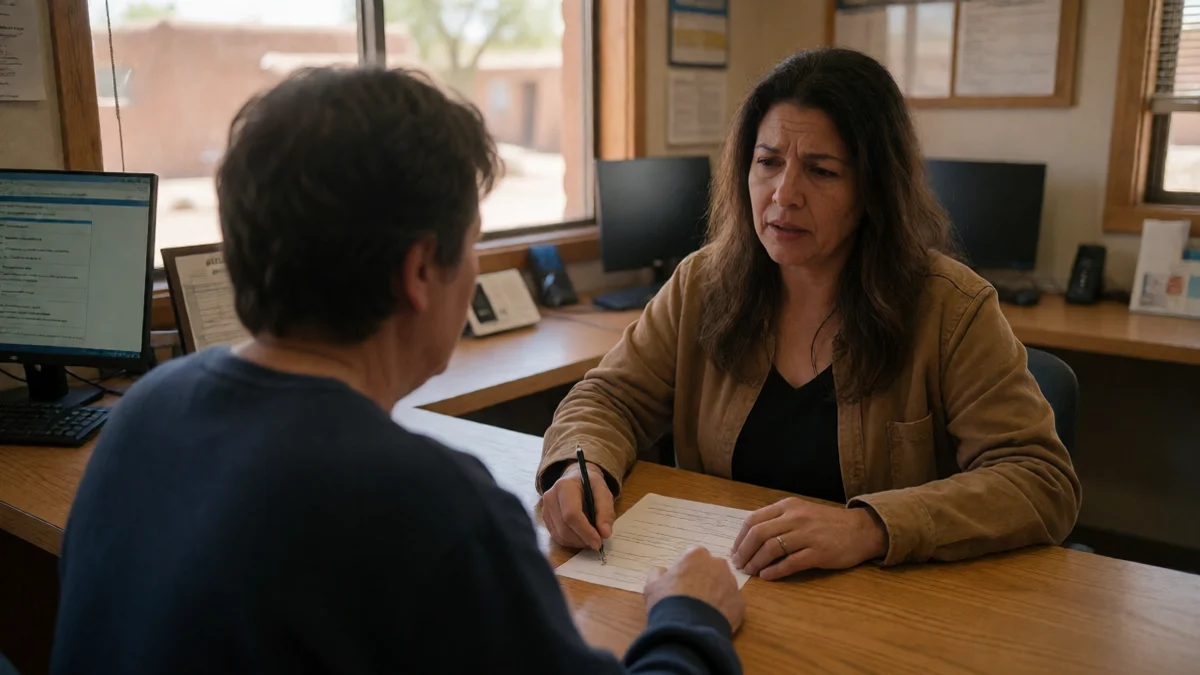
Suppose a New Mexico resident walks into a storefront, sees a business name on the door, and receives a printed offer across the counter. The address and staff make the business easier to identify, but the paper still needs to name the creditor, principal, repayment dates, charges, and payment authorization. A physical counter does not turn an incomplete contract into a clear offer.
An online form removes even that visible starting point. It may collect employment, bank, and contact information before disclosing the company that will receive the application or make the loan. A national site can present terms that vary by borrower location, and an out-of-state address, tribal affiliation, or remote servicing arrangement can muddy claims about authority and governing terms.
For the online offer, identify the creditor and every stated recipient of the application before sending sensitive personal or bank information. For either channel, the operative terms are the ones attached to the proposed agreement, not the speed-of-funding claim on the sign or landing page.
Facts to collect before an application becomes an agreement
- The legal business name, street address, phone number, and website of the company presenting the offer.
- The legal name of the creditor, plus the name of any broker, lead generator, payment processor, or servicer shown in the form or agreement.
- The principal: the amount actually advanced to the borrower.
- Every finance charge and the full repayment amount.
- Each payment date, the amount due on that date, and whether repayment is a single near-term payment or a longer installment schedule.
- The payment authorization method, including any scheduled bank-account debit or card charge.
- The terms for a late payment or returned payment.
- Any cancellation language and the contact details for questions or complaints.
- A dated copy of the disclosures and the proposed contract before accepting proceeds.
Verify unresolved claims with current sources
A lending company’s claimed authority matters only when the name and address match the records. For New Mexico small-loan-company licensing questions, start with the New Mexico Regulation and Licensing Department’s Financial Institutions Division. NMLS Consumer Access is another public search tool for licensing and regulatory information on many consumer-finance companies and branches. Compare the legal business name, address, and any branch information against the creditor named in the agreement, then keep dated copies of the offer and disclosures.
The New Mexico Office of the Attorney General has a consumer-protection function for complaints about potentially unfair or deceptive business conduct. The CFPB also accepts complaints about consumer financial products and services. Those routes help after a dispute; they do not supply a missing creditor name or missing governing terms at the point of application. When those essentials remain unclear, leave the form unfinished.
Official pages used here
- Small Loan Companies — New Mexico Regulation and Licensing Department
- Financial Institutions Division — Frequently Asked Questions — New Mexico Regulation and Licensing Department
- What should I consider if I'm thinking about getting a payday loan online? — Consumer Financial Protection Bureau