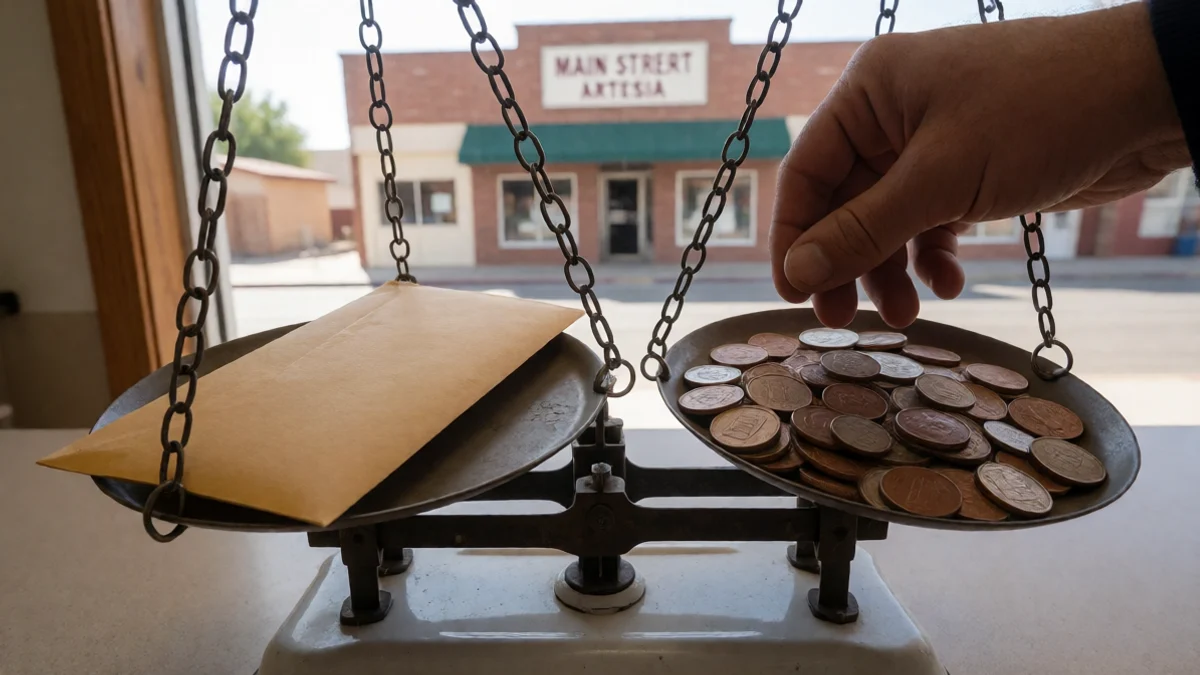
Test cash loans in Artesia, NM in context
Suppose an Artesia resident needs $300 for an immediate expense and sees a cash-loan offer. The advertised amount draws attention, but the offer becomes meaningful only when the resident sees the amount actually provided, every scheduled payment, the payment dates and the full repayment figure.
A loan that supplies cash quickly also places future payments into the borrower’s calendar. A payment due before the next expected income arrives creates a different strain from the same payment due after it. The timing is part of the cost in practical terms, even when the dollar figures stay fixed.
The useful next move is to put the offer’s figures in one view: cash received, number of payments, amount of each payment, due dates, and any stated charges or missed-payment terms. That turns a vague promise of cash into a repayment obligation that can be weighed against the borrower’s own bills and income timing.
What can vary for borrowers in Artesia and Eddy County
The relevant variation is the offer a borrower actually receives and the schedule attached to it. Requested cash amount, payment count, payment dates, stated charges and the amount due at the end of the arrangement determine the real shape of repayment. A borrower considering cash loans in Artesia or elsewhere in Eddy County gains little from a broad description of the product if those figures remain unclear.
Personal timing changes the consequence. A payment that fits after regular household expenses have cleared can be manageable; the same payment earlier in the pay cycle can force a shortfall. That is why the repayment calendar deserves the same attention as the amount of cash requested. Cash is immediate. Due dates are patient, and rather less charming.
Availability also turns on the particular provider and application, so a reader should evaluate the terms presented rather than assume a generic cash-loan description represents the terms available to them.
How to compare cash loans terms and repayment in Artesia
Comparison works best when each offer is reduced to the same few numbers. Start with the cash the borrower receives. Then add every scheduled payment to find the repayment amount. The difference between those figures is the dollar cost of receiving the cash under that offer. Read the due dates alongside that arithmetic, because a lower payment amount can still create pressure when it falls at the wrong point in the month.
For a simple illustrative calculation, suppose an offer provides $300 and calls for two payments of $175. The scheduled repayment is $350: $175 plus $175. The difference is $50. A second offer should be set beside it using the same calculation, then assessed for its payment dates and any stated consequences of paying late or missing a payment.
The document or screen presenting the offer should make clear the payment amount, payment count, dates, charges and conditions that apply if repayment changes course. If a figure or date is absent, the borrower lacks the information needed to judge how the loan will operate in their own budget.